


Tithing – Is it for today?

Tithing for Today
A Hebraic Perspective on Giving in the Modern Age
For many believers, the topic of tithing is shrouded in confusion, guilt, and controversy. Pastors often avoid it, congregations feel uncomfortable, and a vast gap exists between what we say we believe and how we actually live. Yet, if we claim to follow the God of the Bible, we cannot simply carve out the sections of His Word that make us uneasy. Money and resources are among the most discussed topics in Scripture, and understanding God’s design for them is critical for our spiritual health, the health of our communities, and the advancement of His Kingdom.
The Great Irony: Our Contradictory Beliefs
 One of the most paradoxical statements in modern theology is this: typical Christians do not believe in the Law of God, but they absolutely believe in the law of tithing. Conversely, many in the Messianic movement absolutely believe in the Law of God but argue that tithing is no longer required. This strange juxtaposition reveals a deep-seated confusion. If tithing is a Torah commandment, why would those who cherish the Torah dismiss it? And if the Law is done away with, why would those who believe that insist on holding onto one specific financial statute?
This confusion points to a need to return to the biblical text itself—to strip away our traditions, doctrines, and discomfort, and simply ask: What does the Bible actually say?
The Stark Reality: A Decline in Generosity
The statistics are sobering. For over 30 consecutive years, the percentage of income that Christians give to God’s work has declined. Research indicates that only about 3-5% of believers worldwide actually tithe 10% of their income. We say we believe in giving, but our actions—or lack thereof—tell a different story. As the ancient wisdom of James teaches, faith without works is dead. In Hebraic thought, believing and doing are inseparable; to believe is to act. If we truly believe God owns everything and will judge our stewardship, our financial lives should reflect that conviction.
Why Tithing Matters: More Than Money
Many reduce tithing to a financial transaction or a religious bill. But Scripture reveals it as the bedrock of a covenantal system designed for profound spiritual purposes.
 In Malachi 3:8-9, God declares that Israel is under a curse because they have robbed Him in “tithes and offerings.” But to understand this, we must read the preceding verse: “Ever since the time of your ancestors you have turned away from my decrees and have not kept them. Return to me, and I will return to you” (Mal. 3:7). The issue wasn’t merely missing a payment; it was a heart that had turned away from God’s ways entirely. The tithe was the symptom of a deeper disease.
God highlights the tithe over other commandments for a strategic reason. Observing Shabbat or dietary laws primarily costs us time or preference. Tithing strikes at the heart of our pride, our self-sufficiency, and our attachment to the world’s system of mammon. Letting go of our resources for someone we may never meet is a tangible act of faith that proves our covenant loyalty. It’s a line in the sand.
Furthermore, the two great national curses on Israel were related to finances (failure to tithe) and infidelity (idolatry and adultery). Strikingly, these remain the two leading causes of divorce today. The spiritual follows the natural. A misuse of money will always, always lead to unintentional idolatry. When Israel stopped tithing, the Levitical system collapsed. The Levites, whose inheritance was Yahweh Himself and whose job was to teach Torah and maintain the worship system, were forced to wander and find other work. The people were left without spiritual guidance and drifted into idolatry. The lack of faithful giving directly led to national adultery.
The Original Design: What Was the Tithe?
To apply tithing today, we must first understand its original context and purpose.
- It Was for the Levites.Numbers 18:21-24 makes it clear: the tithe was given to the tribe of Levi as their inheritance in return for their service at the Tabernacle. They received no land allotment; their portion was God and the tithes from the other tribes.
- It Had a Multi-Layered Structure.The system was more nuanced than a simple 10%:
- Ma’aser Rishon (First Tithe): Brought annually to the local Levitical city (of which there were 48). This supported the Levites in their local communities.
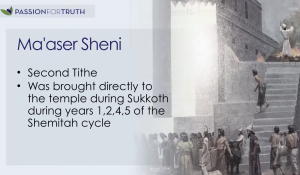
- Ma’aser Sheni (Second Tithe): A second tithe set aside in years 1, 2, 4, and 5 of the seven-year cycle. This was brought to Jerusalem during the feast of Sukkot (Tabernacles) for a celebratory feast shared with family, the Levites, and the poor.
- Ma’aser Ani (Poor Tithe): In years 3 and 6, this tithe replaced the second tithe and was kept locally to support the widows, orphans, and strangers.
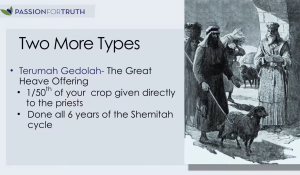
- Terumah (Heave Offerings): Separate from the tithe, these were the “first fruits” offerings given directly to the priests (the sons of Aaron).
- It Was Part of a Welfare System.God’s system—through tithing, gleaning laws, and the Sabbatical year—was designed to care for the poor, the orphan, the widow, and the Levite. It was local, relational, and discernment-based, aiming to restore dignity and provide for those truly unable to provide for themselves.
Common Objections from a Hebraic View
 “Tithing was part of the Mosaic Law, and we are not under the Law.”
This argument is biblically weak. Tithing predates the Law at Sinai. Abraham gave a tenth to Melchizedek (Gen. 14), and Jacob vowed to give God a tenth (Gen. 28). The principle of sacrificial giving is rooted in creation, seen in the offerings of Cain and Abel. Furthermore, the writer of Hebrews uses the story of Abraham and Melchizedek to argue for a priesthood greater than Levi’s (Heb. 7:1-10). Yeshua Himself affirmed tithing, while chastising those who neglected justice and mercy (Matt. 23:23).
“There are no Levites or a Temple today, so tithing is impossible.”
While the specific Levitical recipients and agricultural format have changed, the purpose remains. The tithe was holy to the Lord (Lev. 27:30). You weren’t ultimately giving to Levi; you were giving to God through the system He ordained. The goal was to support those set apart to teach God’s ways and serve the community so that God’s people could be a light to the nations.
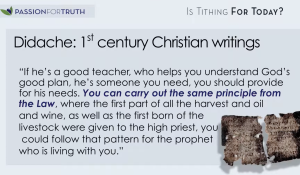
Today, we have those who labor in the word, teaching, and pastoral care (1 Cor. 9:13-14; 1 Tim. 5:17-18). The principle persists: those who dedicate their lives to the spiritual service of the community should be supported by the community. If we argue that the absence of a Temple negates tithing, then by the same logic, we cannot celebrate the biblical feasts, which were equally tied to the Temple and priesthood. We must be consistent.
“Tithing is legalistic; we should give from the heart.”
Absolutely, we should give from the heart! But the Bible never pits the heart against obedience. The tithe was meant to train the heart. It was a minimal starting point—a reminder that everything belongs to God. It curbs greed, builds faith, and funds God’s mission. The “heart-giving” often praised in the New Testament (e.g., the Macedonians in 2 Cor. 8) resulted in sacrificial generosity that exceeded the tithe, it didn’t ignore it.
The Heart of the Matter: It’s About the Inheritance
The most profound understanding of tithing comes from understanding God’s ultimate goal. Deuteronomy 32:9 declares, “For the Lord’s portion is his people, Jacob his allotted inheritance.” God’s inheritance is His people.
When we tithe and give offerings, we are not funding a budget; we are funding the recovery of God’s inheritance. We are supporting the systems—the teaching, the outreach, the discipleship, the care for the poor—that bring people out of darkness and into covenant relationship with Him. When we withhold, we are not just robbing a ministry; we are, in God’s eyes, robbing Him of the means to reach His beloved children. This is the true weight of Malachi’s warning.
A New Covenant Perspective: From 10% to 100%
 For the believer in Yeshua, the standard has been raised, not lowered. The Messiah didn’t give 10%; He gave everything. The new covenant call is for total stewardship. We are not owners, but managers of God’s resources. The tithe is the training wheels—the biblical minimum that acknowledges His ownership. Our goal should be to live within the circle of provision God has drawn for us and to see everything outside that circle as His, to be deployed for His vision.
This isn’t about guilt or shame. It’s about joyous participation in the greatest mission on earth. It’s about aligning our hearts with God’s heart for His lost inheritance. In a digital age, our giving can impact more people than ever before. The return on investment for the Kingdom is astronomical.
A Final Challenge
Let’s move beyond the debates and the discomfort. Let’s study the Word for ourselves. Let’s pray for hearts of generosity that reflect our generous God. Whether you start at 2%, 10%, or 50%, start with obedience and faith. See giving not as an obligation, but as a privilege—a royal system designed to change our hearts, build our communities, and bring God’s children home.
The system hasn’t changed. The need hasn’t changed. God’s desire for a people wholly devoted to Him hasn’t changed. Let’s be that people, and let our generosity shout what our lips profess: that we believe, and that our God is worthy of it all.
Full teaching is here:
Is Tithing for Today? ─ Passion for Truth Ministries
https://youtu.be/gRfhm1byMjY

Jim Staley
Jim’s life’s desire is to help believers everywhere draw closer to the Father by understanding the truth of the scriptures from their original cultural context (a Hebraic perspective) and to apply them in faith for today.


